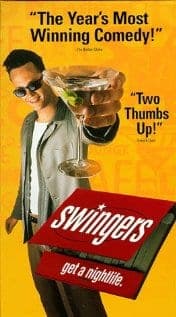
VHS cover for the film Swingers showing a man in sunglasses holding a martini with tagline Get a Nightlife
Key Takeaways
The 1996 film Swingers is a cult comedy-drama about young men navigating Los Angeles nightlife during the 1990s cocktail-culture revival — it is unrelated to the swinger lifestyle.
The title collision has been a running joke inside the lifestyle community for nearly three decades, and it reliably misleads new searchers looking for lifestyle content.
Mainstream film and television have historically handled the swinger lifestyle poorly — either as punchline, as suburban cliché, or not at all — which shapes what new searchers think they are looking for.
A handful of more recent shows and documentaries have represented CNM and swinging more accurately, giving newcomers a better reference point than older titles.
Platforms like Swing.com exist to give the lifestyle its own accurate self-representation, independent of how mainstream media chooses to portray it.
Frequently Asked Questions
Is the 1996 film Swingers about the swinger lifestyle?
No. The 1996 Doug Liman film Swingers is a comedy-drama about young men navigating the Los Angeles social scene during the 1990s cocktail revival. Its use of the word "swingers" draws on mid-century cocktail-culture slang, not on the swinger lifestyle or consensual non-monogamy. The collision with the lifestyle term has generated a long-running joke inside the community ever since the film's release.
Why do so many people searching "swingers movie" find the 1996 film?
Search engines index the film heavily because it is one of the most recognisable titles carrying the word. Most people who arrive there looking for lifestyle content correct course quickly, but the mismatch is common enough that it has become a running joke within the lifestyle community.
Where does the lifestyle community get represented accurately?
More honest representations tend to come from documentary formats, certain recent streaming series that have treated consensual non-monogamy with care, and — most consistently — from the lifestyle community's own channels, including platforms like Swing.com, lifestyle podcasts, and community-run publications. The community's self-representation has grown considerably as digital tools have made it easier to bypass mainstream gatekeeping.
Anyone who has spent time inside the swinger community has run into the same running joke. Someone new mentions they just watched "Swingers" expecting to pick up something about the lifestyle, and a longer-term member delivers the kind line: that film is a cocktail-culture period piece, not a documentary. The 1996 Doug Liman film is, by any measure, a well-made cult classic — but it is not about the lifestyle, and never was. The title collision has become a recurring small disappointment for newcomers curious enough to search the word and end up in the wrong place. This piece is for them.
What the 1996 Film Actually Is — Briefly
The 1996 Doug Liman film, written by and starring Jon Favreau with Vince Vaughn in a breakout role, is a low-budget comedy-drama about young men navigating the Los Angeles social scene during the mid-1990s cocktail-culture revival. That revival — neo-swing music, Zoot-suit aesthetics, Rat Pack nostalgia, cocktail bars replacing dive bars — is what the title is pulling from. The word "swingers" in the film carries its 1950s-era cocktail meaning: a confident, socially active bachelor about town. The film is genuinely good at what it does. It simply does not do what a lifestyle searcher is looking for.
We are going to leave it at that. The film has been written about extensively elsewhere by people whose job is film. For lifestyle readers the relevant fact is the category mismatch, and the rest is a distraction.
Why the Name Collision Keeps Happening
"Swingers" is a word that has carried multiple meanings in American English across the last seventy years. In the 1940s and 1950s, it meant a socially active, nightlife-oriented single — the cocktail-culture usage the 1996 film draws on. By the 1970s, the lifestyle meaning — consensually non-monogamous couples who exchange partners or engage in group sexual play — had come to dominate. Both meanings continue to exist in print and online, and search engines tend to surface the film because it is one of the most recognisable titles using the word.
The practical effect is a recurring navigation problem. Someone curious about consensual non-monogamy types "swingers" into a search bar expecting to find community, resources, or context, and instead gets pointed at a twenty-plus-year-old film about Los Angeles bachelors. The community has grown used to the confusion. Newcomers have to learn to work around it.
What People Searching That Term Are Usually Looking For
If the search that brought someone to a cult film was actually about the lifestyle, what they probably wanted is one of a few adjacent things. They might have wanted a working definition — how swinging differs from polyamory, from open relationships, from casual dating. They might have wanted to know what actually happens at a lifestyle club or a themed house party. They might have wanted to find out whether couples like them — same-sex, mixed-orientation, non-binary, solo — are welcome in the community. Or they might simply have wanted to see the community represented honestly somewhere, rather than through punchline or insinuation.
None of those questions are answered by the 1996 film. All of them are answered — often in some detail — by the contemporary lifestyle community's own resources, including platforms like Swing.com, community-run podcasts, and the growing library of couples-written accounts that have accumulated online over the last two decades.
How Mainstream Media Has Handled the Lifestyle
The broader picture is worth naming. For most of the twentieth century, mainstream film and television portrayed the swinger lifestyle either as comedic backdrop — suburban key-party scenes played for laughs — or as pathology, with dramatic plots ending in collapse. Those portrayals shaped what several generations of viewers thought the lifestyle was, usually without much correspondence to the actual community.
Representation has improved in pockets. A handful of recent documentary projects and streaming series have treated consensual non-monogamy with more care, interviewing participants directly rather than projecting a script onto them. Reality-style formats have given some lifestyle couples a platform to speak for themselves. The work is uneven and the clichés still dominate, but the slow shift toward more honest portrayal is visible.
What comes up again and again is that members stop trusting mainstream portrayals pretty quickly. A film or series gets the tone right on occasion; more often it treats the lifestyle as either wild or tragic, and neither matches the experience of the couples and singles who actually live it. Members often mention that they find more accurate reflection of their community inside lifestyle podcasts, couples-written blogs, documentary formats that let participants speak directly, and the forums and profiles on platforms like Swing.com — where the self-representation is whatever the community actually is, rather than whatever a scriptwriter decided it should be.
— Lifestyle members we've spoken with about the portrayal of swinging in culture
The Lifestyle's Own Representation
One of the more important shifts in the last decade is that the lifestyle community has built its own media. Podcasts hosted by long-term lifestyle couples, blogs written by members, convention livestreams, and community forums on platforms like Swing.com all provide a more accurate picture of what the contemporary swinger lifestyle actually looks like than any mainstream film does. The self-representation is plural rather than singular — there is no one "swinger experience," and the resources reflect that. Couples in their twenties, forties, sixties; same-sex and mixed-orientation configurations; solo members and established partnerships; people newly curious and people with two decades of community involvement all contribute.
This matters because a newcomer who has only encountered the lifestyle through a screenplay tends to arrive with a very narrow set of expectations. A newcomer who has spent a few hours on lifestyle-authored material arrives with a much more accurate sense of what the community actually is and is not.
What to Do Instead of Watching a Period Piece
For anyone who ended up at this article because they searched "swingers movie" expecting lifestyle content, here is the more useful version of that search. Swing.com's community forums, event calendar, and verified member profiles will give a grounded introduction to what the contemporary swinger lifestyle looks like in practice. Community-authored posts cover the specific questions most new searchers actually have — how people start, what etiquette looks like at events, how couples navigate the early conversations with each other, and what distinguishes swinging from adjacent arrangements like polyamory and open relationships.
The cultural footnote — that a well-regarded 1996 comedy happens to share the community's name — is funny in passing. The more useful takeaway is that the community has grown well past the point of needing mainstream film to introduce it. Its own materials do that job better, and they are easier to find than ever.
The Takeaway
A title is just a title. The 1996 film has its place in cinema history, and the swinger lifestyle has its own long history — longer than the film, broader than any single portrayal, and more accurately represented now by the community's own voice than by anything Hollywood has produced. If the search brought someone here looking for the second one, they are already most of the way there.
 Swing Editorial··5 min read