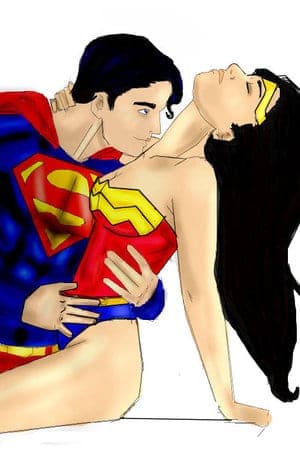
Cartoon illustration of Superman embracing and kissing the neck of a reclining Wonder Woman
Key Takeaways
Cosplay-themed lifestyle parties succeed when the theme is inclusive and every guest — regardless of relationship configuration, gender identity, or cosplay budget — can participate without feeling excluded.
Superhero and iconic character costumes are among the most popular choices for lifestyle cosplay events because the reference points are widely shared and the costume requirements are flexible.
Opt-in signaling via costume accessory choice gives guests a low-pressure way to indicate openness to interaction without having to announce it verbally.
Touching or engaging with someone's costume without permission is the same as touching the person — consent applies to the costume as fully as it applies to any other context.
Mask-based and character-anonymous costume choices offer meaningful identity protection for members who value anonymity, which is a real and legitimate reason people enjoy cosplay events.
Frequently Asked Questions
Why are cosplay-themed parties popular in the lifestyle community?
Cosplay themes reduce the social friction of walking into a lifestyle event because every guest arrives with an instant conversation opener — their costume. The shared visual language of a character theme means people have something to talk about before any deeper connection develops. Superhero and character themes are particularly popular because the reference points are universally recognizable and the costume barrier is low enough that everyone can participate.
What are good costume choices for a lifestyle cosplay event?
Iconic superhero costumes — Superman and Wonder Woman are classic examples — are consistently popular because they are recognizable, can be assembled from off-the-shelf pieces, and scale from elaborate to minimal depending on preference. Couples and individuals of any gender can approach any character. Non-binary and gender-swapped takes on familiar costumes are common and celebrated in experienced lifestyle cosplay communities.
How should consent norms apply at a cosplay lifestyle event?
The same explicit consent rules that govern any lifestyle event apply at cosplay parties with an important addition: do not touch someone's costume without permission. A costume is an extension of the person wearing it, and reaching for someone's cape, wings, or prop without asking is a consent violation in the same category as any other uninvited physical contact. Hosts should restate this norm at the start of the evening.
What is opt-in signaling at a cosplay lifestyle event?
Opt-in signaling is a pre-agreed accessory or visual cue that guests can choose to wear or display to indicate openness to interaction beyond conversation. A specific wristband color, a particular accessory worn visibly, or a designated props table that guests can pull from are all formats hosts use. Critically, the system works only if the meaning of opting in — and not opting in — is explained clearly at the start of the event and honored consistently by all guests.
Superhero costumes show up at lifestyle events more consistently than almost any other theme. Walk into a well-attended cosplay party in any major market and you will find characters from across the pop culture spectrum — iconic capes, masks, and armor pieces assembled from thrift shops and costume warehouses — mingling with couples in everything from full latex suits to a single accessory pinned to cocktail attire. The reason superhero and character themes recur so reliably is not that they are the most creative option. It is that they work.
This guide is not about the characters. It is about why cosplay-themed lifestyle parties succeed when they succeed, what makes them fall flat when they do not, and how hosts and guests can approach these events in a way that is inclusive, consent-aware, and genuinely fun.
Why Cosplay Themes Work at Lifestyle Events
A well-chosen theme solves the hardest problem in any lifestyle event: the first thirty seconds of walking into a room full of strangers. Without a theme, every guest has to invent an opening line from nothing. With a cosplay theme, the costume does that work. "Love your cape," "amazing attention to detail on that armor," and "I was going to wear that exact character" are all icebreakers that exist only because of the shared visual frame.
The secondary function is identity and anonymity. For members who value discretion — and many lifestyle participants do, for entirely legitimate professional and personal reasons — a mask or character costume offers a layer of separation between their public face and their event presence. Masquerade-adjacent cosplay formats give guests genuine anonymity as a feature rather than a workaround. This is not a bug; it is part of why these events attract members who would not attend a themed event that required clear identification.
Superhero and iconic fictional character costumes are particularly effective because the reference is universal. Superman and Wonder Woman are examples that almost every adult recognizes — a couple can go as that pairing, or swap the characters, or go as versions of one character together, or approach the characters individually. Same-sex couples, queer couples, non-binary guests, and solo members all have equal access to the same costume pool without the heteronormative defaults that some themed events inadvertently enforce.
Inclusive Cosplay: Who the Theme Is For
A cosplay event that only works for heterosexual couples in traditional gender expressions is not doing its job. The best cosplay lifestyle parties are built with every guest configuration in mind from the start.
That means naming inclusivity explicitly in the event listing — signaling that same-sex couples, non-binary guests, solo members, and mixed-orientation pairs are welcome and that character choices are not assigned by gender or relationship configuration. It means selecting a theme that has enough breadth that guests can find a character or archetype they connect with. And it means — when superhero or character themes are chosen — selecting from a universe where the character roster is large enough that every guest can find a fit without defaulting to gender-typed options.
Non-binary and gender-swapped takes on familiar characters are not uncommon at experienced lifestyle cosplay events — they are celebrated. A guest who shows up as a gender-swapped version of an iconic superhero is engaging with the theme creatively, and experienced hosts and guests recognize that.
The cosplay parties that we remember for years are the ones where the host clearly thought about every person walking through the door. Not just the couple-couple dynamic, but the solo woman, the same-sex couple, the non-binary guest who came alone. When the event listing said 'all characters welcome, all configurations welcome, costumes encouraged but not required,' that told us something real about the host's values before we ever arrived. The party matched the promise. The ones that felt narrow — where the theme clearly assumed everyone was a straight couple and the costume choices reflected that — those fell flat even when the turnout was good.
— Lifestyle event hosts and attendees on Swing.com we've heard from
Opt-In Signaling and Costume Consent
One of the most useful tools a cosplay host can offer is opt-in signaling — a pre-agreed visual cue that guests can choose to use to indicate openness to interaction beyond conversation. Common formats include a designated wristband color available at check-in, a specific accessory (a flower, a particular prop) that guests can pick up voluntarily from a props table, or a colored ribbon that can be added to a costume.
The mechanics matter less than the execution. For opt-in signaling to work:
It must be explained clearly at the start of the event. Every guest needs to understand what the cue means and what it does not mean. Wearing the opt-in accessory signals openness to approach and conversation — it does not signal consent to touch, to any specific activity, or to anything that has not been explicitly discussed and agreed.
Not wearing the cue must be entirely neutral. Guests who choose not to opt in are making a valid choice, and that choice should not prompt questions, pressure, or side commentary. The opt-out state is the default, and it deserves the same respect as any other stated limit.
The host couple or event staff need to model and enforce it consistently. If guests see opt-in signaling treated selectively — applied to some guests but not others, or used as a shorthand for more than it means — the system breaks down and trust erodes quickly.
Respecting the Costume Itself
A point that experienced cosplay event guests emphasize: the costume is part of the person. Reaching for someone's cape without asking, handling their prop without permission, or commenting on their costume in ways that reduce it to its wearability for your interests is a form of contact that requires the same consent as any other.
Cosplayers — particularly those who have put significant time and creative effort into a costume — deserve to have that work recognized as artistic, not just aesthetic. Complimenting the craft, asking about the character choice, and engaging with the costume as creative expression before engaging with the person wearing it is both respectful and, in practice, a far more effective opening than anything else.
Running a Cosplay Party on Swing.com
Swing.com's event listing tools are well-suited to cosplay events. A listing with a strong costume-specific hero image, a theme-forward title, and a first paragraph that names the character or genre framework clearly will outperform a generic "costume party" listing in RSVP conversion every time. Including a short opt-in signaling explanation in the event description sets expectations before anyone walks through the door.
Group messaging through confirmed RSVPs lets you distribute costume inspiration, answer questions about dress code range ("yes, partial costumes count"), and restate house rules — including the consent reminders that cosplay contexts make especially important — in a format guests can review before the night.
If you are looking for existing cosplay and themed lifestyle events in your area, Swing.com's event calendar filters by city and event type. Verified hosts and established event series appear alongside first-time party listings — read the host profile and event history to understand who is running the night you are considering.
 Swing Editorial··5 min read