Swing Logo
  • Blog
  • Lifestyle
  • Swinger Couples
  • Couple Swapping
  • Clubs
  • Threesomes
  • Hotwifing
  • Cuckold
  • BDSM
  • Open Relationships

This site does not contain sexually explicit images as defined in 18 U.S.C. 2256. Accordingly, neither this site nor the contents contained herein are covered by the record-keeping provisions of 18 USC 2257(a)-(c).

Disclaimer: This website contains adult material. You must be over 18 to enter or 21 where applicable by law. All Members are over 18 years of age.

Events|Podcast|Blog|About|FAQ

Terms of Use|Privacy Policy|FOSTA Compliance Policy

Copyright © 2001-2026

DashBoardHosting, LLC. All Rights Reserved.

  1. Home
  2. ›Blog
  3. ›Swinger Lifestyle
  4. ›Lifestyle and Adult Media: Distinct but Overlapping Worlds

Lifestyle and Adult Media: Distinct but Overlapping Worlds

Swing EditorialSwing Editorial·Published December 22, 2011·3 min read

Swinger Lifestyle

TL;DR

Adult media and the consensual non-monogamy community are frequently confused with each other in popular culture, but they are structurally distinct. Adult media is performance produced for an audience on camera. The lifestyle community is private consensual interaction between adults for its own sake, typically away from any audience or recording. The two share some cultural values — body positivity, sex-positivity, comfort with sexuality — but they are not the same community, they do not operate by the same norms, and the assumption that participation in one implies participation in the other is structurally wrong.
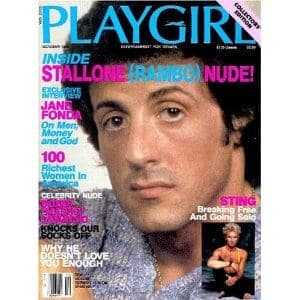
Vintage Playgirl magazine cover featuring Sylvester Stallone with headline about a Rambo nude feature

Key Takeaways

  • Adult media is a performance economy with professional production norms, contracts, and performers who have chosen that work as their labor. The lifestyle community is private consensual interaction between adults and operates by entirely different norms.
  • The two communities share some cultural values — body positivity, sex-positivity, comfort with sexuality, and broad acceptance of diverse bodies and configurations — but shared values are not the same as shared participation.
  • Most lifestyle-active couples do not participate in adult media, and most adult media performers do not participate in the lifestyle. The cultural conflation between the two communities is a media phenomenon, not a reflection of membership overlap.
  • Privacy, discretion, and the explicit absence of cameras are core norms at lifestyle events and venues, which is structurally incompatible with how adult media is produced.

Frequently Asked Questions

Is the consensual non-monogamy community the same as the adult film industry?
No. They are structurally different communities that are frequently conflated in popular culture. Adult film is a performance economy producing content for an audience on camera, with professional production norms and performers whose participation is their labor. The lifestyle community is private consensual interaction between adults for its own sake, generally without cameras and away from any audience. The two share some cultural values — body positivity, sex-positivity, and comfort with sexuality — but they operate by different norms and are not the same community.
Do lifestyle venues allow recording or photography?
Established lifestyle venues and events explicitly prohibit cameras, phones, and recording devices inside play areas. This is a core norm across the community, not a venue-specific rule. The prohibition protects member privacy, supports consent (because participation happens without becoming content), and keeps the space structurally different from a performance environment. Members who violate this norm are typically removed from venues and banned from events.
Why does popular culture conflate the two?
Mainstream coverage of adult media tends to be more visible than coverage of the lifestyle community, and both involve non-monogamous sexual imagery in some form. The shortcut of treating them as the same community is a media phenomenon rather than a reflection of actual membership overlap. Research on consensual non-monogamy from institutions including the Kinsey Institute frames the lifestyle as a relationship-structure question, which is a different question than adult media participation addresses.

Related articles

  • Ancient Egypt and Group Sexual Ritual: What Scholarship SaysDec 18, 2013
  • What Attracts People at Lifestyle Events: An Inclusive LookMay 16, 2012
  • Exhibitionism in the Lifestyle: A Consent-First PrimerJan 25, 2024

Popular culture tends to collapse the consensual non-monogamy community and the adult film industry into a single undifferentiated category. The collapse makes for simpler headlines, but it misrepresents both communities. Adult media is a professional performance economy that produces content for a viewing audience under industry-specific norms, contracts, and labor structures. The lifestyle community is private consensual interaction between adults, typically in explicitly no-camera environments, for its own sake rather than for an audience. The two communities share some cultural values. They do not share structure, norms, or membership in any meaningful systematic way.

Two Communities, Not One

The cleanest way to understand the distinction is to notice what each community is organized around. Adult media is organized around production: performers are at work, the environment exists to create a recorded product, and the norms of the industry — contracts, testing protocols, performer agency within a professional setting — are labor norms. The consensual non-monogamy community is organized around private consensual interaction between adults for its own sake. Venues and events within the community are explicitly not performance environments. Cameras are prohibited. What happens stays with the people who were there.

Research summarized by the Kinsey Institute and by the post-2020 consensual-non-monogamy cohort (Moors, Conley, Haupert) frames the lifestyle as a relationship-structure question — how couples and individuals organize intimate relationships — rather than as a sexual-content question. That framing is structurally different from anything the adult media industry is answering.

What the Two Communities Actually Share

The overlap between the two communities is cultural rather than structural. Both tend to value body positivity and to welcome a wider range of bodies than mainstream cultural norms do. Both operate from a sex-positive starting point that treats adult sexuality as a legitimate part of adult life rather than as something to be apologized for. Both include people who are comfortable with nudity, sexuality, and open conversation about desire in ways the broader culture often is not.

Shared values, though, are not shared membership. The people in a lifestyle venue on any given Saturday are not the people on the cast sheet of any given production. The overlap that does exist — lifestyle-active couples who also enjoy watching adult content, adult media performers who in their private lives happen to be in consensual non-monogamy configurations — is incidental rather than definitional.

Members who have been in the community for years tend to say the same thing when the conflation comes up: "We are not performers." The lifestyle venues they attend are camera-free by explicit policy. What they value is privacy, discretion, and the specific kind of encounter that happens when no one is producing anything. The distinction, they note, matters especially to newer members who arrived expecting something more like a film set and quickly discovered the community is quieter, more private, and more relational than the media framing suggested.

— Long-term lifestyle-active couples on Swing.com

Privacy Norms That Separate the Two

The privacy norms of the lifestyle community are not decorative. Established lifestyle venues — on-premise clubs, lifestyle resorts, major lifestyle events and takeovers — prohibit cameras, phones, and recording devices in play areas as a matter of policy, not preference. Members who violate this norm are removed and generally banned. The reasoning is structural: the moment recording becomes possible, the space stops being a private-consensual-interaction environment and starts becoming a performance environment. Most of what the community has built depends on the first kind of space, not the second.

That structural difference is why the casual cultural equivalence between "swingers" and "porn" misses. The absence of a camera is not a minor detail. It is the defining feature of what makes the lifestyle community the thing it is, and the presence of a camera is the defining feature of what makes the adult media industry the thing it is.

What This Means for Curious Couples

For couples exploring consensual non-monogamy, the practical takeaway is that expectations formed by adult media will not map onto lifestyle experience in useful ways. Real lifestyle events tend to be slower, more conversational, more clothes-on-early, and more about mutual vetting than media portrayals suggest. The people in the room are generally professionals, parents, partners, and neighbors who happen to have this part of their adult life. They are not performing. That difference — between performance and private interaction — is the single most important frame to carry into early lifestyle experiences.

The two communities will continue to be conflated in mainstream coverage. That conflation is a media habit, not a reflection of how either community actually works.