Swing Logo
  • Blog
  • Lifestyle
  • Swinger Couples
  • Couple Swapping
  • Clubs
  • Threesomes
  • Hotwifing
  • Cuckold
  • BDSM
  • Open Relationships

This site does not contain sexually explicit images as defined in 18 U.S.C. 2256. Accordingly, neither this site nor the contents contained herein are covered by the record-keeping provisions of 18 USC 2257(a)-(c).

Disclaimer: This website contains adult material. You must be over 18 to enter or 21 where applicable by law. All Members are over 18 years of age.

Events|Podcast|Blog|About|FAQ

Terms of Use|Privacy Policy|FOSTA Compliance Policy

Copyright © 2001-2026

DashBoardHosting, LLC. All Rights Reserved.

  1. Home
  2. ›Blog
  3. ›Swinger Lifestyle Review
  4. ›Video Verification and In-App Video in Lifestyle Apps

Video Verification and In-App Video in Lifestyle Apps

Swing EditorialSwing Editorial·Published September 2, 2011·3 min read

Swinger Lifestyle Review

TL;DR

Video verification and in-app video chat have become a standard part of the pre-meeting workflow in the modern lifestyle community. The goal is simple and practical: confirm that a profile belongs to the real couple or single it claims to, and get a sense of tone and chemistry before meeting in person. Platforms like Swing.com integrate video into the messaging flow so verification and conversation happen in the same place rather than scattered across outside tools.
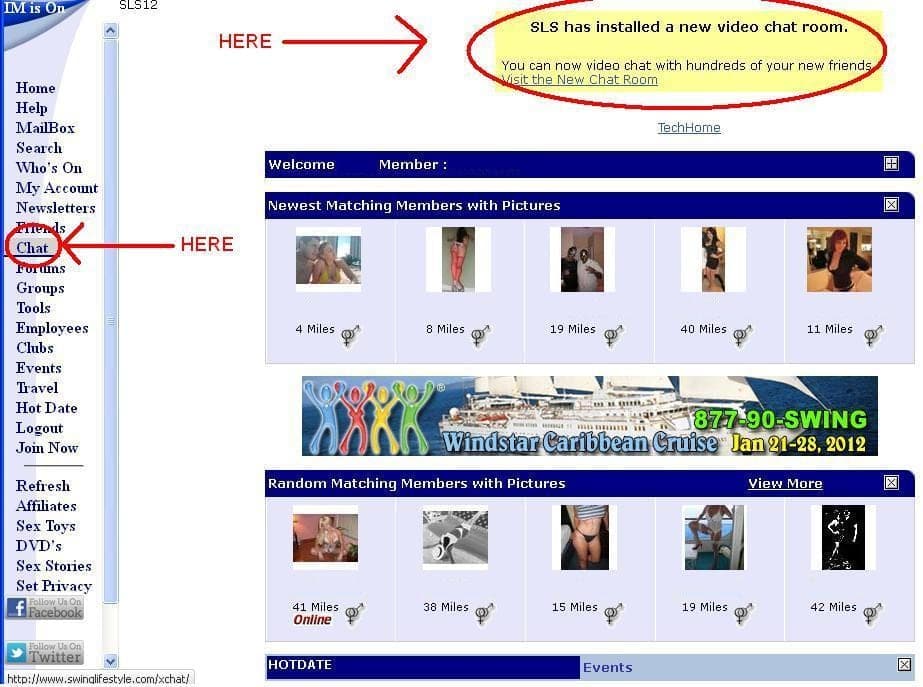
Annotated SLS website screenshot with red arrows pointing to the Chat link and a yellow new video chat announcement

Key Takeaways

  • Video verification has become a practical baseline in the lifestyle community for confirming that a profile belongs to the real couple or single.
  • In-app video chat lets members handle the verification step and the "are we a match" conversation in the same place, rather than moving to outside tools.
  • A brief video call before an in-person meeting is a standard practice many experienced members now treat as non-negotiable.
  • The feature does not replace face-to-face chemistry; it surfaces tone, energy, and basic compatibility cheaply before anyone commits to a meeting.
  • For newer couples, a low-stakes video call is one of the easiest ways to build confidence in the online-to-offline transition.

Frequently Asked Questions

Why is video verification now common in the lifestyle community?
Because it solves two problems at once. First, it confirms that a profile actually represents the couple or single described — catching mismatched photos, outdated images, or misrepresented couple status before any in-person meeting. Second, it lets both sides get a sense of tone, energy, and basic social fit cheaply, without the time or emotional stakes of a first meeting. Experienced members describe skipping the video step as a pattern that tends to correlate with first-meeting disappointments.
What does in-app video chat typically offer?
Most modern lifestyle platforms integrate video directly into the messaging flow, so a conversation that started in text can move to video in the same place without moving to an outside tool. Features vary by platform but typically include private one-on-one calls, small-group calls for couples-to-couples conversations, and some ability to verify the call participant against the profile's existing photos. Keeping this step inside the platform makes the whole pre-meeting workflow simpler.
Does a video call replace an in-person first meeting?
No. Video surfaces some things quickly — tone, energy, whether the conversation flows — but it does not replace the chemistry of meeting in person. The purpose is to filter out obvious mismatches and misrepresented profiles cheaply, so the actual first meeting happens with couples or singles who have already cleared a basic compatibility bar. Treating video as a screening step, not as the event itself, is the way most experienced members use it.

Related articles

  • Lifestyle Apps and Mobile Discovery in 2026Aug 22, 2013
  • Where Couples Actually Find Lifestyle Parties in 2026Jan 2, 2015
  • Using Swing.com on the Go: Mobile Lifestyle in 2026Nov 26, 2013

The lifestyle community's move toward video verification and in-app video chat was quiet and gradual, but the end result is meaningful: a short live video call before an in-person meeting is now a standard part of the workflow for most experienced members, and many treat it as non-negotiable. What older profile-and-message-based platforms once handled with photos alone has been augmented by a step that confirms the person on the other side is the person the profile describes, and lets both sides get a sense of basic chemistry before anyone drives anywhere. Platforms like Swing.com integrate video into the messaging layer so the verification step and the getting-to-know-you conversation happen in the same place rather than scattered across outside tools.

What Problem Video Actually Solves

Two problems, mostly, and solving them together is what makes the feature useful.

The first is identity verification. Photos on a profile can be outdated, can be from a single earlier phase of a relationship, or can occasionally not represent the people they claim to. A two-minute video call eliminates this ambiguity cheaply. Experienced members often describe this as the most important piece — not because misrepresentation is common, but because catching it before an in-person meeting is much easier than after.

The second is social-fit screening. Tone, pacing of conversation, whether someone listens as well as they talk, whether the couple across the screen is visibly on the same page with each other — these show up in five minutes of video in a way that does not come across cleanly in text. Getting this information cheaply means the actual first in-person meeting can happen with expectations already calibrated.

Why Keeping It In-Platform Matters

In-app video chat has a specific advantage over moving the conversation to an outside video tool: the context stays together. The profile, the conversation history, the shared photos, and the video call all sit in the same place, which makes it easy to return to where the conversation was and continue from there. Moving a conversation to an external tool adds friction and fragments the relationship.

Platform video also typically sits inside the verification layer rather than outside it. A call happens between identities the platform has already partially vouched for, which reduces the most common categories of misrepresentation.

The step that seems to save the most disappointment is a short video call before any in-person meeting is planned. Not a long conversation — ten or fifteen minutes is plenty. What the call surfaces is mostly the things text cannot: tone, whether both halves of a couple are actually enthusiastic, whether the chemistry across the screen feels present or forced. The couples who have done this for a while describe skipping the step as a reliable way to end up at a drink date that neither side was really ready for.

— Couples on Swing.com who use video calls as part of their pre-meeting process

What Video Is Not

Video does not replace face-to-face chemistry, and treating it as a full substitute for a first meeting is a mistake. The purpose is screening, not decision-making. Two couples who clear the video step are not guaranteed to work in person; they are simply spared the most common categories of first-meeting disappointment.

A Reasonable Default

For newer couples and singles, the practical default that seems to work well is: exchange messages and photos first, move to a short video call once both sides are interested, then plan an in-person meeting if the video call lands well. Three steps, each cheaper than the next, each filtering out different things. The combination takes more total time than diving straight to an in-person meeting, but the overall experience tends to be better — fewer wasted evenings, fewer awkward first-meeting surprises, and more meetings that feel worth the effort once they happen.