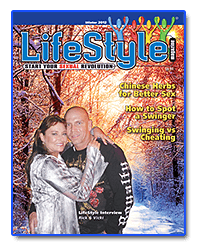
LifeStyle magazine winter cover featuring a couple in winter clothing standing in a snowy wooded scene
Key Takeaways
Lifestyle media spans print magazines, podcasts, video channels, and community-written formats, each with different strengths for how the community talks to itself.
Good lifestyle media is newcomer-friendly, honest about risks, and interview-driven — stories from named community members tend to do more than generic advice pieces.
Directory and resource content — club listings, event calendars, safer-sex guides — is where lifestyle media has lasting practical value beyond any single issue or episode.
The community's best storytelling focuses on the texture of real experience rather than on fantasy scenarios, which is what keeps the editorial posture credible over time.
Frequently Asked Questions
What does good lifestyle media actually look like?
Good lifestyle media treats the community as adults making considered choices. It is newcomer-friendly without being exploitative or condescending. It is honest about risks — jealousy, communication failures, mismatched enthusiasm — rather than presenting the lifestyle as uniformly positive. It is interview-driven, with real voices from the community, rather than fantasy-driven. And it offers practical resources — club listings, event calendars, safer-sex guidance — that have value beyond any single piece of content.
What formats does lifestyle media come in?
The range is wide. Print and digital magazines have long been part of the community landscape. Podcasts have become a major format because the audio medium suits the honest, interview-driven conversations the community benefits from. Video — long-form interviews, event documentation, educational content — serves a different audience. Community-written blogs, forums, and directories remain important for practical navigation. Most members encounter a mix of formats rather than relying on any single source.
Where do club and event directories fit in?
Directories are where lifestyle media has some of its most durable practical value. A reliable, current listing of lifestyle clubs by region, a calendar of lifestyle events, and honest reviews of venues help community members — especially newcomers — navigate in ways that narrative content alone cannot. The best directories are maintained actively, verify listings regularly, and include enough context for a newcomer to understand whether a given venue or event is likely to suit them.
Lifestyle media — the collection of print magazines, podcasts, video channels, community blogs, and directory resources through which the swinger and consensual non-monogamy communities talk to themselves about their own experience — plays a larger role in community life than newcomers usually realise. It is where the community narrates its own norms, surfaces honest accounts of what the lifestyle actually looks like, builds the practical infrastructure of club and event directories, and onboards new members into a vocabulary and etiquette that cannot be learned anywhere else. This piece steps back from any single publication to look at what lifestyle media is for, what makes it good, and how the formats available today compare.
What Lifestyle Media Is For
At its best, lifestyle media serves two audiences at once. For the established community, it documents the texture of real experience — interviews with couples about how they came to the lifestyle, honest accounts of mistakes and recoveries, reviews of events and venues, evolving conversations about consent, safer sex, and community norms. For newcomers, it provides a way to understand the lifestyle before participating in it: what a club night actually looks like, what to expect at a first event, what the vocabulary means, what is reasonable and what is a red flag.
The editorial posture matters more than the format. Media that treats the community as adults making considered choices — curious, capable of nuance, interested in honest accounts rather than fantasy — tends to build lasting trust. Media that leans heavily on fantasy framing or on hype tends to age badly and to lose the community it was ostensibly written for.
The Formats in the Landscape
Print and digital magazines have long been part of the community, and they continue to serve a specific kind of reader — someone who wants depth, images, and the substantial context that longer-form writing allows. The best community magazines have combined narrative features with practical resources: interviews, travel reporting, lifestyle education, and club and event directories in the back pages.
Podcasts have become a major format in the last decade. The audio medium suits the honest, interview-driven conversations the community benefits from. Couples talking at length about their experience, educators discussing consent and communication, event organisers explaining how they run their nights — these are conversations that work well as audio and that newcomers can listen to at their own pace.
Video — long-form interview channels, event documentation, educational content — reaches a different audience, and for some newcomers it is a lower-friction way to see what a lifestyle event actually looks like before attending one. Community-written blogs and forums remain important, especially for practical navigation: regional guides, venue reviews, first-timer advice.
Members who have been in the community for a while consistently describe the most useful media as the work that was honest about the texture of real experience — interviews where couples talked about what actually happened, including the parts that did not go well; event reviews that were specific rather than promotional; directory content that was current rather than aspirational. The work that wore out fastest was the hype-driven content that promised a uniformly glamorous experience and skipped over the communication work, the jealousy work, and the ordinary mistakes that everyone makes early on.
— Lifestyle-active members of the Swing.com community who have talked about what lifestyle media has been useful for them
Directories and Practical Resources
A reliable, current directory of lifestyle clubs, events, resorts, and community resources is one of the most practically valuable things lifestyle media can offer. For an experienced traveller in the lifestyle, a good regional directory saves hours of ad-hoc research. For a newcomer, it is often the first place they find out that a local club exists at all. The best directories are maintained actively — listings verified, closed venues removed, new openings added — and include enough context for a newcomer to understand whether a given venue or event is likely to suit them.
Canonical lifestyle venues and events the community points to include Trapeze, Hedonism II, Desire Resort, Caliente, Temptation Resort, Colette Events, Naughty in N'awlins, Desire Takeover, Hedo Sexfest, and Bliss Cruise — and the honest editorial posture for any directory is to defer to each venue's own website for current details on schedules, rates, and policies, because those details change.
The Editorial Posture That Ages Well
The lifestyle media that holds up over time shares a short list of qualities. It is interview-driven rather than generic. It is honest about risks and mistakes, not just the good nights. It is newcomer-friendly without being condescending. It is specific rather than vague. And it treats its readers as adults with agency, capable of making informed choices about their own relationships and their own play. That posture, across any format, is what distinguishes lifestyle media that the community continues to value from media that fades after a season.
 Swing Editorial··4 min read