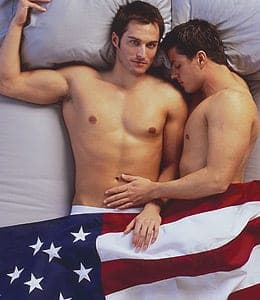
Two shirtless men lying close together on white pillows with an American flag draped across their laps
Key Takeaways
Bisexual stories on Swing.com are written by real swinger couples, making them relatable and potentially inspiring for readers exploring bisexuality.
The swinger lifestyle is an accepting community where bisexual men and women are welcomed without judgment.
Reading bisexual stories can help couples and individuals overcome societal fears and spark ideas for their own encounters.
Frequently Asked Questions
Where can I read bisexual swinger stories?
Swing.com hosts thousands of member-submitted bisexual stories written by real swingers. These accounts cover male bisexuality, female bisexuality, and same-sex encounters within the lifestyle. Browsing these stories can help curious individuals and couples explore bisexual scenarios vicariously, gather ideas, and become more comfortable with their own desires before acting on them.
Are there bisexual men in the swinger community?
Yes, though male bisexuality has historically been less visible in swinger spaces than female bisexuality, the lifestyle community is notably accepting of all sexual orientations. Men who are bisexual or bi-curious can explore same-sex encounters in swinger settings without stigma. The community's general ethos is one of openness and non-judgment toward any consensual adult sexual expression.
How does reading erotica help with exploring bisexuality?
Reading bisexual stories and erotica allows individuals to safely explore attraction and fantasy without pressure to act immediately. It can reduce anxiety by normalizing same-sex desire, help partners communicate about shared curiosities, and provide inspiration for real encounters. Many swingers credit stories as the catalyst that helped them become comfortable enough to pursue bisexual experiences in real life.
Bisexual men exist in the lifestyle. They have always existed in it. What has changed, slowly and unevenly, is whether the community's structures and language have caught up with that reality — or whether bi men continue to navigate a space that says it is open-minded while quietly treating male bisexuality as an asterisk.
This article is not a story about a single encounter. It is about the patterns that bisexual men in CNM communities describe across their experiences: where they find genuine welcome, where they encounter erasure, and what it looks like when a lifestyle community gets inclusion right.
The Double Standard That Bi Men Navigate
The asymmetry is documented and widely acknowledged among long-time community members. Bisexual women are frequently welcomed, celebrated, and specifically sought out in lifestyle couple profiles — "bi-friendly" in practice often means "the woman in our couple plays with women." Bisexual men, by contrast, encounter a different reception: profiles that specify "no bi guys," invitations to events where same-sex male play is simply not discussed as an option, or the assumption that a man who identifies as bisexual must be gay and therefore incompatible with couple-oriented swinging.
Research published in Archives of Sexual Behavior on bisexual identity in consensually non-monogamous communities finds that bi men report meaningfully higher rates of identity invalidation than bi women in the same environments. Bi erasure — the tendency to deny, ignore, or dismiss bisexual identity — affects men disproportionately in lifestyle spaces where female bisexuality has been normalized while male bisexuality remains controversial.
The frustration that bi men describe is not primarily about access to sexual encounters. It is about being seen accurately. Being told that bisexuality in men is "not really a thing," or that a couple only does "soft play" as a way to exclude male same-sex contact specifically, or that a man's stated identity is treated as a red flag rather than as relevant information about who he is — these experiences accumulate.
What Genuine Inclusion Looks Like
The lifestyle community at its best is one of the few mainstream social environments where male bisexuality can exist openly and without stigma. The consent-first culture, the explicit communication norms, and the fundamental ethic of non-judgment that define the lifestyle's better spaces all translate naturally into bi-affirmative ones.
Bi-affirmative couples and bi-friendly spaces share some recognizable features: they name same-sex male play as an option rather than assuming it is off-limits; they do not conflate bisexuality with any particular relationship structure or level of experience; they treat a bi man's identity with the same straightforwardness they would extend to a bi woman's. The National Coalition for Sexual Freedom has documented bi-erasure as a specific equity concern within kink and CNM communities, and the corrective is not complicated — it is taking people at their word about who they are.
For bi men navigating the lifestyle for the first time, the most useful signal in another profile is not whether it mentions bisexuality in the abstract, but whether it specifies what that actually means in practice: whether same-sex male connections are welcomed, sought, or simply not excluded. Language is information.
What comes up most often is the exhaustion of having to advocate for your own identity in spaces that claim to be judgment-free. Members describe reading profiles carefully for coded language — "we are bi-friendly" sometimes means one thing, and sometimes means something much narrower — and having to ask directly before knowing whether they will encounter an affirming space or one where their orientation is treated as a complication. The experiences that stand out as genuinely good are the ones where nobody made it a big deal in either direction: no specific fascination, no skepticism, just the same baseline respect extended to any member. That, several members noted, is the bar. It is not a high one. But it takes practice to clear it consistently.
— Bisexual male members of Swing.com we've spoken with
Bi Pride and Community Identity Within CNM Spaces
The Bisexual Pride and broader queer community have long included people for whom the lifestyle is part of their full identity, not a separate compartment. Queer polycules, same-sex swinging couples, non-binary and genderfluid members who experience attraction in multiple directions — these configurations exist throughout the lifestyle community and increasingly shape its culture.
Bi men in the lifestyle bring the same things to the community that any other member brings: curiosity, care about consent, interest in genuine connection, and the desire to be met honestly by people who are doing the same. None of those things are orientation-specific. The community that recognizes this — and builds its spaces accordingly — is the one that bi members, across all gender identities, describe as worth staying in.
Finding Affirming Connections on Swing.com
Swing.com's profile structure allows members to specify orientation and same-sex openness with enough detail to communicate accurately. Couples who welcome male bisexuality can say so directly in their profiles; bi men can filter for explicitly bi-friendly or bi-affirmative connections and use the group messaging features to get a genuine sense of a couple's values before any meeting is planned.
The platform's community groups include bi-focused and LGBTQ+-welcoming spaces where members share experiences, ask questions, and connect with others navigating similar dynamics. For bi men who have had mixed experiences elsewhere in the lifestyle, these groups are often the first place where the double standard is named, discussed, and actively countered.
The Broader Conversation
The lifestyle community's own values — consent, honesty, non-judgment, respect for each person's stated identity — point directly toward bi-affirmative practice. Applying those values consistently to bisexual men is not a new requirement. It is simply the application of what the community already believes to a group that has been inconsistently included.
Browse the LGBTQ+-welcoming and bi-friendly community groups on Swing.com to find members and couples who have done the work to make that welcome real rather than theoretical.
 Swing Editorial··4 min read