The mainstream swinger lifestyle skews heterosexual and couple-with-couple by demographics and history. Same-sex couples and queer-identifying lifestyle participants exist, are growing in number, and have built their own corners of the scene — but the experience is meaningfully different from the heterosexual default. Here's what the actual landscape looks like.
The asymmetry
Most lifestyle dating sites and clubs were built around a male-female couple as the unit. Same-sex couples find:
- Most "couple seeking couple" listings mean MF couple seeking MF couple. Few sites have robust filtering for couple-orientation matching.
- Bisexual women are heavily welcomed; bisexual men less so. "Bi-friendly" filters on most lifestyle sites map predominantly to women-women contact in soft swaps.
- Single-male nights are heteronormative by default. A bisexual single male is welcome but his bi orientation is not the design point of the night.
- Trans and non-binary inclusion is uneven across the scene. Some clubs and events are explicitly inclusive; others are quietly not.
Where same-sex couples find the scene
- Specific resort takeover weeks. Hedonism and Desire run periodic LGBTQ+-focused weeks; these draw a more inclusive crowd than the default weeks.
- Pride-aligned lifestyle events. Some lifestyle organizers run Pride-month events that are explicitly inclusive of same-sex and queer couples.
- City-specific queer kink scenes. Most major US metros have a queer kink scene that overlaps with the lifestyle for couples who play at the intersection.
Bisexual men in the lifestyle
"Bi-MMF" — a threesome involving two men who engage with each other — is a distinct subculture within the lifestyle. Visibility is growing, dedicated online groups exist, and some clubs and events specifically welcome bisexual men. The path is harder than for bisexual women because of the demographic asymmetry, but it is real and growing. Profile bios that explicitly note "bi-MMF interest" find each other faster than coded filters.

Same-sex female couples
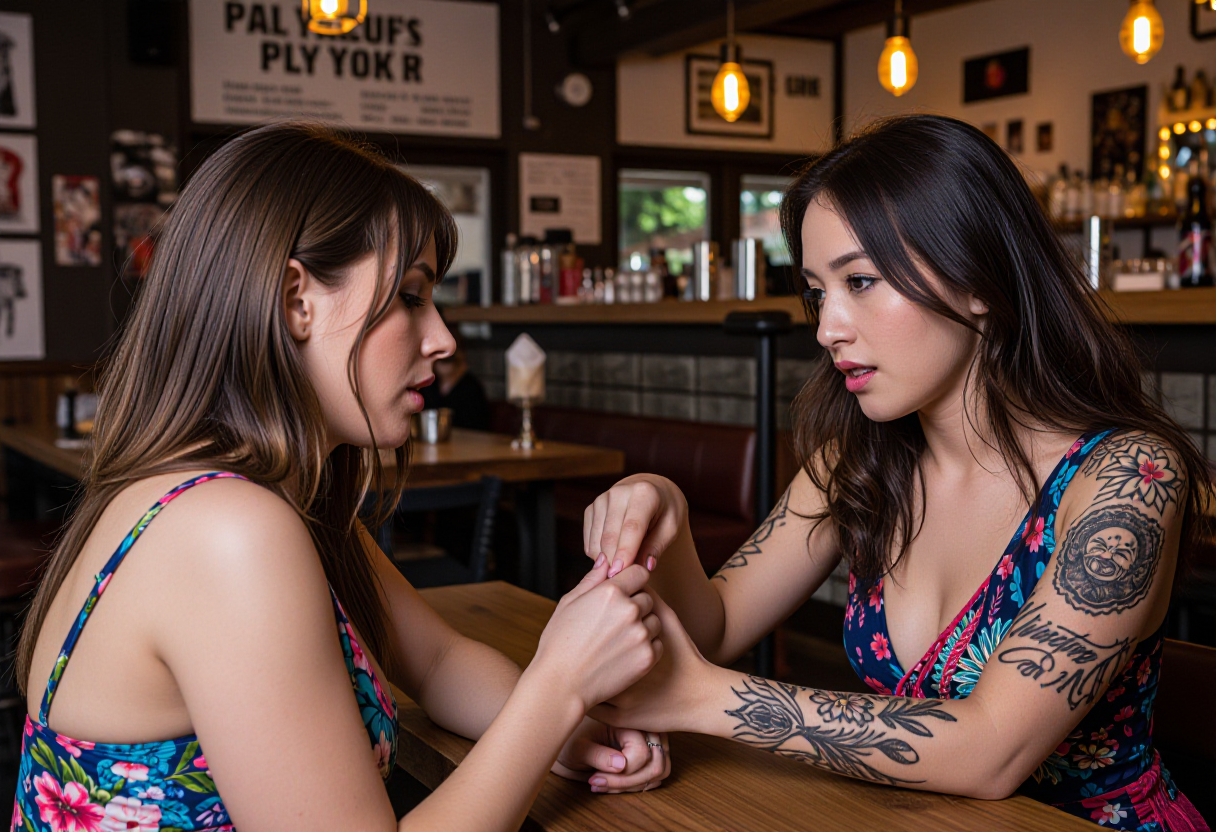
Lesbian and bisexual female couples find a relatively warm welcome at most lifestyle events because the scene already accommodates female-female play. The experience tends to be:
- Easy entry into co-ed events; couples-only spaces sometimes accept FF couples.
- Constant approach interest from heterosexual couples seeking unicorns or threesomes — which can be welcome or tiring depending on what you're looking for.
- Smaller dedicated FF lifestyle scene than the broader lifestyle, but it exists in most major metros.

Trans and non-binary participants
Trans women have established corners of both the lifestyle and the kink scene; trans men and non-binary participants face less developed infrastructure. Specific events and clubs are explicitly inclusive — and worth seeking out — while others are uneven in practice. Vetting works both ways: as much as a trans participant is being read by the venue, the venue is being read by the participant.
What to do if you're queer and considering the lifestyle
- Look for explicitly inclusive events and read their policies, not just their marketing.
- Connect online before any in-person meet — vetting reveals more than a profile bio.
- Don't feel obligated to play in heteronormative-default spaces. The scene is bigger than its loudest mainstream.
See also: ENM podcasts for inclusive voices.