Swing Logo
  • Blog
  • Lifestyle
  • Swinger Couples
  • Couple Swapping
  • Clubs
  • Threesomes
  • Hotwifing
  • Cuckold
  • BDSM
  • Open Relationships

This site does not contain sexually explicit images as defined in 18 U.S.C. 2256. Accordingly, neither this site nor the contents contained herein are covered by the record-keeping provisions of 18 USC 2257(a)-(c).

Disclaimer: This website contains adult material. You must be over 18 to enter or 21 where applicable by law. All Members are over 18 years of age.

Events|Podcast|Blog|About|FAQ

Terms of Use|Privacy Policy|FOSTA Compliance Policy

Copyright © 2001-2026

DashBoardHosting, LLC. All Rights Reserved.

  1. Home
  2. ›Blog
  3. ›Swinger Lifestyle
  4. ›How to Read Lifestyle Platform Advertising Honestly

How to Read Lifestyle Platform Advertising Honestly

Swing EditorialSwing Editorial·Published December 7, 2012·3 min read

Swinger Lifestyle

TL;DR

Lifestyle platform advertising varies widely in honesty. The signals of a trustworthy platform are consent-first policies, couple-centered design, transparent moderation, and realistic claims about the user base. The red flags are "find out if your spouse is on this site" pop-ups, pushed cam girl overlays, "100% verified profiles, no fakes" absolutism, and advertising that targets single men as the primary revenue stream rather than the actual lifestyle community.
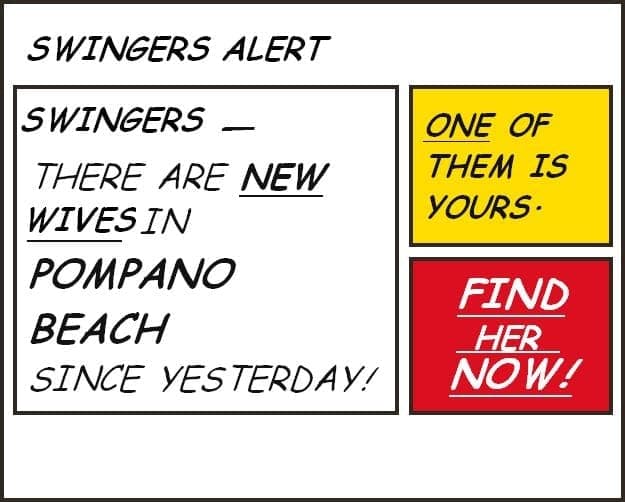
Mock comic-style banner ad reading Swingers Alert, New Wives In Pompano Beach, One Of Them Is Yours, Find Her Now

Key Takeaways

  • Honest platforms describe their policies and moderation openly rather than relying on absolutist "no fake profiles" promises.
  • Pop-up ads that suggest a user's partner may already be on a dating site are a classic manipulation tactic; legitimate lifestyle platforms do not use them.
  • Single-male-heavy advertising patterns signal a platform optimized for male revenue rather than for actual couple-and-community participation.
  • Profile authenticity depends more on user norms and moderation than on any advertising claim a platform can make.
  • Consent-first, couple-centered design is a cultural choice visible in the interface itself, not just in marketing copy.

Frequently Asked Questions

How can readers spot a low-quality lifestyle platform?
Several signals tend to cluster. Pop-up advertising that suggests a user's spouse may be on the site is a classic manipulation tactic. Cam girl video overlays and aggressive retargeting suggest the revenue model is optimized around single-male impulse conversions. Absolutist claims about profile authenticity ("100% verified, no fakes") are almost always marketing fiction — no platform at scale can credibly make that promise. Honest platforms describe what their moderation actually does, including its limits.
Why are fake or outdated profile photos a common problem?
Online dating at every scale struggles with self-presentation honesty, and lifestyle platforms are no exception. Some users post old photos, borrowed photos, or ones that flatter past selves. Community norms on legitimate platforms push hard against this — authenticity is the foundation of lifestyle connection, and misrepresentation gets called out quickly. Readers should bring the same skepticism they would to any dating platform and prioritize profiles with recent, consistent, and varied photos.
What makes a lifestyle platform worth using?
Worthwhile platforms are built for the actual community they serve — couples and singles who already know the lifestyle or are entering it with curiosity and consent. Useful markers include couple-centered design, meaningful moderation, transparent privacy practices, realistic marketing, and a user base that reflects the diversity of the lifestyle rather than a single demographic. The interface itself tends to tell the story; if it feels like an impulse-buy funnel, it probably is one.

Related articles

  • How To Spot Real Swingers Personals Profile OnlineApr 29, 2021
  • How to Start Swinging in 2026 — A Practical GuideAug 6, 2015
  • How the Lifestyle Connects Online in 2026: Beyond Chat RoomsJan 10, 2014

Lifestyle platform advertising ranges from honest community marketing to manipulative clickbait, and readers deserve a clear-eyed way to tell the difference. The useful signals are not always obvious at first glance, but they cluster predictably once someone knows what to look for. This piece walks through the red flags that suggest a platform is optimized for impulse conversions rather than lifestyle connection, and the positive signals that suggest a platform is actually built for the community it claims to serve. The underlying principle is consistent across every category: honest platforms describe what they do, including the limits, while dishonest ones make absolutist claims that no platform at scale can credibly deliver.

Red Flags Worth Recognizing

Several advertising patterns recur across low-quality platforms. Pop-up ads that suggest a user's spouse may already be on the site are an old manipulation tactic — they prey on the viewer's insecurity rather than describing any real product. Cam girl video overlays that appear unprompted signal a revenue model optimized for single-male impulse traffic rather than actual lifestyle community. Aggressive retargeting that follows a user around the web long after they have closed the tab reflects an ad budget aimed at conversion rather than community fit. None of these is a fatal diagnosis on its own, but when several appear together, the pattern is clear.

The "No Fake Profiles" Problem

Another common red flag is absolutist language about profile authenticity. "100% verified users, no fakes ever" is marketing fiction; no platform at scale can credibly make that claim. What responsible platforms do instead is describe their moderation honestly — what identity-verification steps exist, where the limits are, how reports are handled, how quickly inauthentic profiles are removed. Transparency about the process is more trustworthy than a blanket promise about the outcome. Users benefit more from knowing how reports work than from being told, unverifiably, that reports are never necessary.

What Single-Male-Heavy Marketing Tells You

The lifestyle is populated by couples, single women, and single men in genuine roles — and by long tradition it is a community that organizes around couples. Platforms whose advertising is visibly optimized for single male conversions (and which rely on that demographic for the majority of paid memberships) tend to reflect that imbalance in the actual user experience. Couples report finding fewer potential couple connections, more unwanted messages, and a gender ratio that makes the platform less useful for the kind of community the lifestyle actually is. The marketing tells you something real about what the product is.

Lifestyle participants who have seen platforms come and go over the years describe a consistent pattern. The platforms that invested in couple-centered design, honest moderation, and realistic marketing built durable communities. The platforms that leaned on clickbait ads, cam girl overlays, and absolutist promises cycled through users quickly and rarely produced the kind of connections couples were actually looking for. The interface itself, they say, tells the story before any profile does.

— Long-term lifestyle community members on Swing.com we've heard from

Positive Signals Worth Looking For

Good signs show up in the product itself. Couple-centered design (profiles that handle two-person accounts well), transparent privacy practices (where photos appear, who can see what), realistic moderation (clear rules, visible enforcement, no absolutist promises), and advertising that speaks to the actual community rather than impulse traffic. A platform that describes its limits honestly is usually more trustworthy than one that makes impossible promises — because the former is working from a realistic picture of what online community can and cannot guarantee.

Evergreen Takeaway

The lifestyle deserves platforms that treat it as a real community with real people, not as a conversion funnel. Reading advertising critically — noticing what it promises, who it targets, and how it describes its own limits — is one of the simplest filters available. Honest platforms tend to read as calm and specific; dishonest ones tend to read as loud and absolutist. The difference is not subtle once someone knows to look for it.